



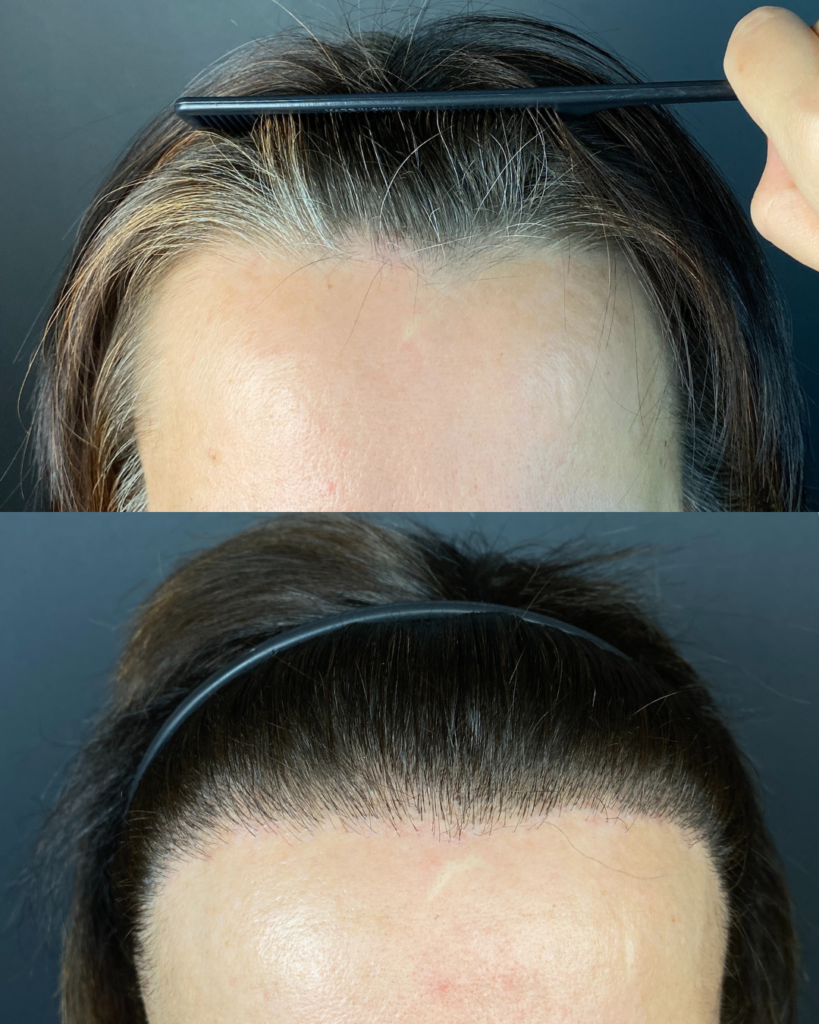
 Before
After
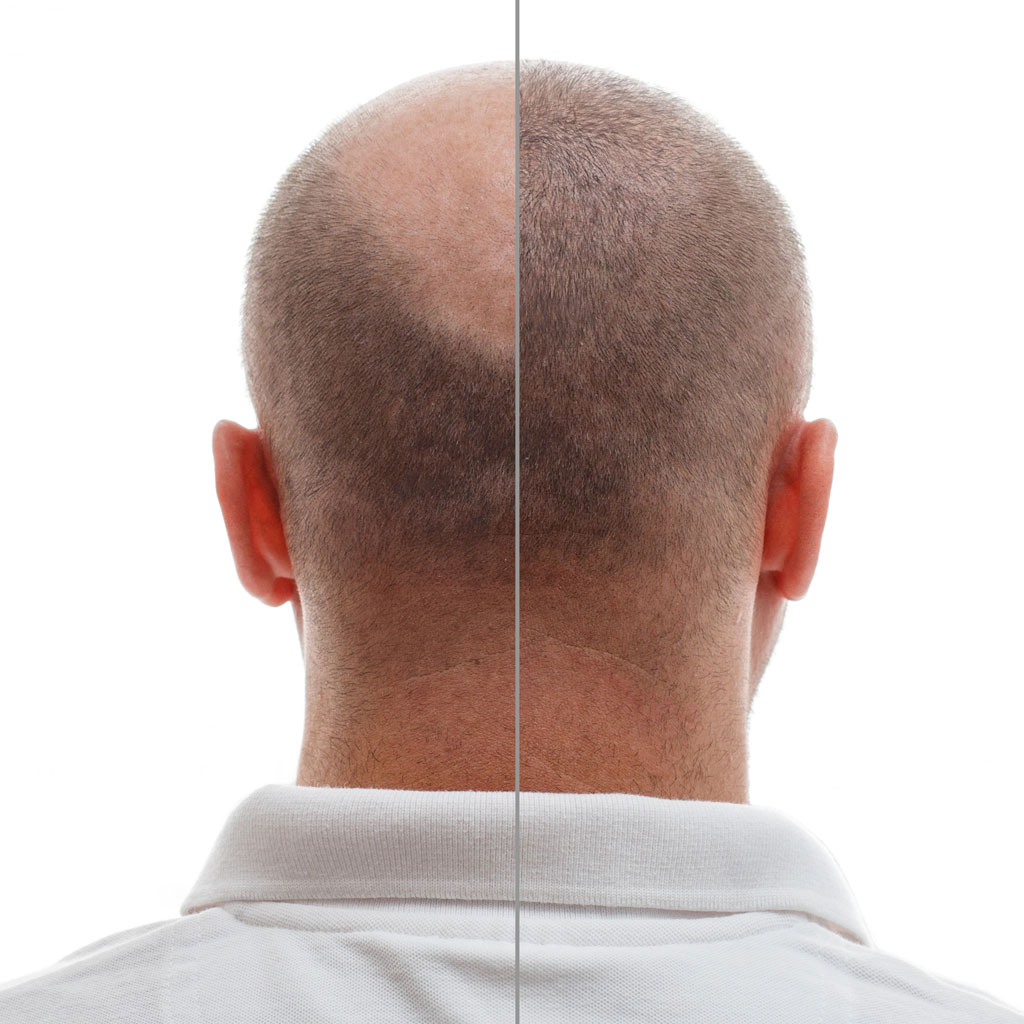
Before
After
Modern hair transplantation using the FUE method
Hair transplant
FUE hair transplantation is a modern procedure used to treat specific types of hair loss. Every procedure is preceded by a medical consultation and patient assessment. The FUE method involves extracting individual hair follicles, which are then implanted into the area requiring hair restoration.
- Extraction of individual hair follicles without a linear skin incision.
- Individualized planning of the placement of transplanted hair follicles.
- Minimally invasive nature of the procedure.
EXPERIENCE
0+
years of experience in FUE transplantation
SCALE OF SUCCESS
0+
FUE transplant procedures performed
PRECISION
0,5 mln+
transplanted follicular units (grafts)
CONFIDENCE
0%
effectiveness of new hair regrowth
* The graft acceptance and regrowth rate (96%) is based on PT Clinic’s internal clinical studies and international medical literature regarding FUE microsurgery (Source: International Society of Hair Restoration Surgery / ISHRS). The final result of the procedure depends on the patient’s individual biological characteristics and adherence to post-procedure instructions.
What does a hair transplant consist of?
A hair transplant is a medical procedure performed on individuals with specific types of hair loss, following a medical assessment to determine suitability. The procedure involves harvesting individual hair follicles—known as grafts—typically from the back of the head, and subsequently implanting them into areas requiring hair restoration. The scope of the procedure and the placement plan for the transplanted follicles are determined on an individual basis during a consultation with a physician.
At PT Clinic, hair transplants are performed using the modern FUE method, which does not require the surgical excision of a strip of skin. Each follicle is extracted individually using specialized micro-instruments, eliminating the risk of linear scarring and significantly shortening the healing time.
This procedure is also referred to as hair transplantation, hair implantation, or hair grafting; regardless of the terminology, its essence lies in the precise transfer of healthy hair follicles to areas requiring restoration, while maintaining the natural direction and density of hair growth.
Facts about the procedure
What do you need to know?
Before deciding on the procedure, check the key parameters of the FUE hair transplant—duration, type of anesthesia, recovery process, and the longevity of the results—all in one place.
Indications
Androgenetic alopecia, receding hairline, thinning, scalp scars
Duration
6–10 hours (depending on the number of grafts transplanted)
Anesthesia
Local
Convalescence
Approximately 7–10 days until a return to full activity.
Final results
Initial regrowth after 3–4 months, final result after 12 months.
Durability
Permanent result (hair from the safe zone does not fall out)
“A hair transplant is a procedure that requires an individual approach and proper patient selection. A well-planned procedure, performed at the right time, allows for a natural and desired result without excessive trauma to the scalp.”
Who is a hair transplant intended for?
Hair transplantation is a procedure used to treat specific types of hair loss. Not every patient is a suitable candidate for the procedure; therefore, a medical consultation and assessment are essential steps. This process involves evaluating the extent of hair loss, the underlying causes, the progression of the condition, and the potential of the donor area.
Who qualifies for a hair transplant?
Individuals with certain types of hair loss may be eligible for a hair transplant. However, a medical consultation and eligibility assessment are required. During this visit, the doctor evaluates factors such as the nature of the hair loss, the condition of the donor area, and other elements relevant to planning the procedure.
A good candidate for a hair transplant is a person who:
A good candidate for a hair transplant is a person who:
- androgenetic alopecia occurs with a stable course,
- the donor zone is characterized by appropriate density and quality of hair follicles,
- no active, rapid hair loss is observed,
- expectations regarding the effects of the procedure are realistic and consistent with medical possibilities,
- The scalp is healthy and free from active inflammation.
When is a hair transplant not recommended?
There are situations where a hair transplant is not the optimal solution or should be postponed.
A hair transplant is not recommended when:
A hair transplant is not recommended when:
- the alopecia is active and progressive, without prior stabilization,
- there are inflammatory diseases of the scalp (e.g. scarring alopecia, active psoriasis),
- the donor area is too weak or insufficient to achieve a satisfactory result,
- uncontrolled hormonal disorders or other systemic conditions are present,
- The patient has not completed the conservative treatment phase for hair loss.
What should be done if the patient is not a candidate for a hair transplant?
Not qualifying for a hair transplant does not mean there are no treatment options for hair loss. In many cases, conservative methods and supportive therapies prove effective, helping to halt the balding process and improve the condition of the scalp.
Depending on the cause and severity of the problem, treatments such as medication, scalp mesotherapy, platelet-rich plasma (PRP) therapy, and modern regenerative therapies—including exosomes—are employed. Regular medical check-ups and monitoring of treatment outcomes are also crucial. In many cases, a hair transplant using the FUE method can only be performed once the hair loss process has been stabilized.
Depending on the cause and severity of the problem, treatments such as medication, scalp mesotherapy, platelet-rich plasma (PRP) therapy, and modern regenerative therapies—including exosomes—are employed. Regular medical check-ups and monitoring of treatment outcomes are also crucial. In many cases, a hair transplant using the FUE method can only be performed once the hair loss process has been stabilized.
Find out if you are a candidate for a hair transplant. Schedule a consultation where the doctor will assess your scalp and donor area and recommend the best treatment strategy.
Schedule a consultation
Hair transplant results
The results of a hair transplant are not visible immediately after the procedure, as the hair regrowth process occurs in stages and requires time for the scalp and hair follicles to fully recover. Initial changes may be noticeable after a few months, while the final results are typically assessed 12 months after the procedure.
Before
After
How is a hair transplant performed?
A hair transplant procedure comprises a medical consultation and suitability assessment, followed by the procedure itself and post-operative care. At PT CLINIC, the FUE method is used; this involves extracting individual hair follicles from a donor area and implanting them into areas requiring hair restoration. The scope of the procedure is determined on an individual basis during the consultation with the doctor.
Consultation and procedure planning
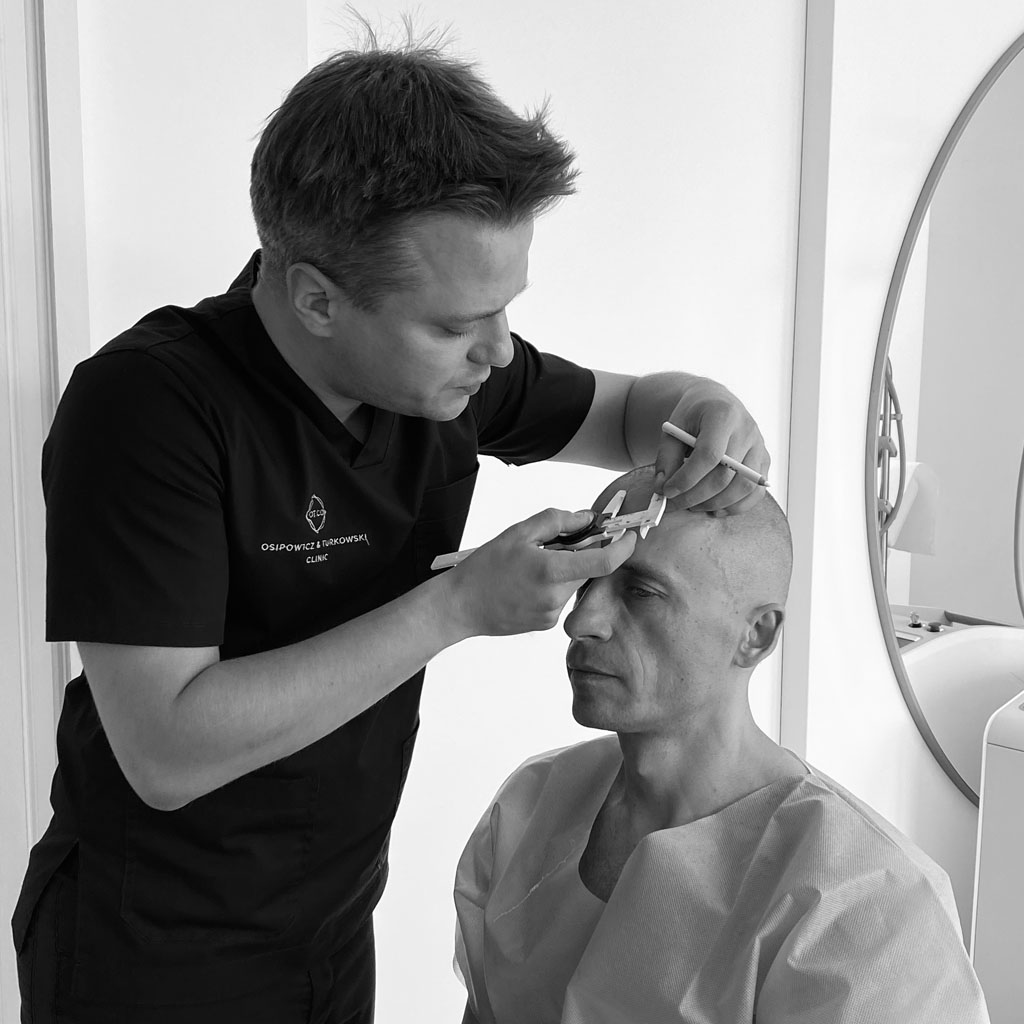
The process begins with a medical consultation to assess the degree of hair loss, the condition of the scalp, and the quality of the donor area. Based on this assessment, the doctor plans the hair transplant procedure, the hairline, and the estimated number of grafts, tailoring the result to the patient's facial features and the anticipated progression of hair loss.
Preparation and anesthesia
On the day of the procedure, the donor area and the implantation site are properly prepared. Local anesthesia is then administered, ensuring the hair transplant is painless while the patient remains fully conscious throughout the procedure.
Harvesting hair follicles (grafts)
The next stage involves extracting individual hair follicles from the donor area, most commonly the back of the head. With the FUE method, each graft is harvested individually using precision micro-instruments, which avoids the formation of linear scars.
Preparation and implantation of grafts
The harvested hair follicles are sorted and prepared for implantation. They are then implanted into the areas affected by hair loss, maintaining the natural direction, growth angle, and density of the hair—factors that are crucial for the aesthetic outcome of the hair transplant.
Completion of the procedure and post-procedure recommendations
After the implantation procedure is complete, the patient receives detailed instructions regarding scalp care and the proper course of action during the first few days following the hair transplant. Returning home on the same day is possible, and recovery proceeds gradually.
Post-procedure results and follow-up
Following a hair transplant, results appear gradually, in line with the natural hair growth cycle. Temporary shedding of the transplanted hair may occur during the initial weeks; this is a physiological stage of the recovery process. New growth begins after a few months, and the final result of the transplant is typically visible after 12 months. Throughout this period, the patient remains under the care of the medical team and attends follow-up appointments.
How much does a hair transplant cost?
The cost of a hair transplant is determined individually during a medical consultation. The final price depends on various factors, including the number of hair follicles to be transplanted, the scope of the procedure, and the extent of hair loss. Each procedure is assessed based on the patient’s specific needs and medical indications.
The cost of a hair transplant in Warsaw varies depending on the treatment area and the desired aesthetic outcome. Pricing differs for correcting receding temples compared to restoring the hairline or increasing density at the crown or across the entire scalp. At PT Clinic, hair transplants are performed using the modern FUE method, which enhances the precision of the procedure and the final result.
To get an idea of the cost of a hair transplant in your specific case, the best approach is a medical consultation or a preliminary quote based on photos, which allows for determining the actual scope of the procedure.
|
Minor hair transplant procedure
(receding hairline, lowering of the hairline) up to 1,000 grafts
|
to 15,000 PLN |
|---|---|
|
Average hair transplant procedure
(receding hairline, crown area transplant) – 1,000–2,000 grafts
|
15,000 – 27,000 PLN |
|
Large-scale hair transplant procedure
Procedure (full head) – 2,000–2,600 grafts
|
30,000 – 35,000 PLN |
|
Maximal procedure
over 2,600 grafts
|
35,000 PLN |
Kalkulator graftów
Use the interactive calculator, mark the areas affected by hair loss, and find out how many grafts you need to restore thick hair.
Grafty:
0
Włosy:
0
* Prezentowane wartości są szacunkowe i mają charakter poglądowy. Ostateczna liczba graftów oraz plan zabiegu są ustalane indywidualnie podczas konsultacji lekarskiej.
Umów konsultacjęFAQ
Below, we have compiled answers to the most frequently asked questions about hair transplants. We explain aspects related to the safety of the procedure, the results, the recovery period, and the entire process to help you make an informed decision.
Hair transplantation is performed under local anesthesia, so the procedure itself causes no discomfort. The patient remains conscious throughout and can converse normally. After the procedure, minor symptoms such as a sensation of scalp tightness may occur, but these resolve on their own shortly thereafter.
In the first few weeks following a hair transplant, the transplanted hair may fall out temporarily. This is a natural stage of the recovery process. The hair follicles remain in the scalp and begin a new growth cycle after a few months.
New hair typically begins to grow back about 3–4 months after the procedure. Over time, the hair increases in density and length, while the final results of the hair transplant are usually visible after 9–12 months.
Yes. A hair transplant produces a permanent result because the follicles used for implantation are harvested from areas resistant to androgenetic alopecia. Once established in the new location, the hair grows according to its natural cycle for many years.
The number of grafts depends on the degree of hair loss, the size of the treatment area, and the desired hair density. The exact number is determined individually during the consultation, following an assessment of the scalp and donor area.
The extent to which the hair is shortened depends on the treatment plan and the technique employed. In most cases, shortening the hair in the donor area is necessary; however, for select patients, solutions are available to minimize the visibility of the treated area during the recovery period.
Returning to work is usually possible a few days after the procedure, particularly for office jobs. In the case of manual labor or work requiring significant physical exertion, the recovery period may be longer and is determined on an individual basis.
Strenuous physical exertion and contact sports should be limited for several weeks following the procedure. A gradual return to sports activities should follow the attending physician’s recommendations.
A hair transplant is a procedure preceded by a medical consultation and assessment of suitability. During the visit, the doctor evaluates any indications for the procedure as well as potential contraindications. They also discuss the procedure itself, post-operative recommendations, and possible adverse effects with the patient. All these steps are intended to rule out any unforeseen complications.
Not every patient is a candidate for the procedure. Suitability for a hair transplant depends on factors such as the cause of hair loss, the condition of the scalp, and hair density in the donor area. Therefore, a medical consultation is required prior to the procedure.
Why do patients choose a hair transplant at PT Clinic?
Choosing the right hair transplant clinic is a crucial step in planning the entire treatment process. At PT CLINIC, every procedure is preceded by a medical consultation and assessment to determine suitability and develop an individualized treatment plan. All hair transplant procedures are performed in accordance with current medical standards using the FUE method.
Experienced team
The hair transplant procedure is performed by an experienced medical team specializing in the diagnosis and treatment of hair loss and in hair transplantation. Years of practical experience and adherence to standardized procedures enable the hair transplant to be planned on an individual basis, taking into account the type of hair loss and the potential of the donor area.
Modern hair transplant methods
At PT Clinic, hair transplants are performed using the modern, minimally invasive FUE method, which involves extracting individual hair follicles. This technique eliminates the need to excise a strip of skin, minimizes scalp trauma, and shortens the post-procedure recovery period.
Natural-looking hair transplant results
Each hair transplant is planned with consideration for the natural hairline, growth direction, and target density. Precise graft implantation ensures a natural-looking result, free from visible signs of the procedure or an artificial appearance.
Safety and monitoring of treatment
The hair transplant procedure is performed under sterile medical conditions, adhering to the highest safety standards. The patient remains under the team’s constant care throughout both the procedure and the recovery period, and the course of treatment is regularly monitored.
Reviews of hair transplants
Hair loss and progressive thinning affect not only one’s appearance but, above all, daily well-being and self-confidence. At PT Clinic, we prioritize utmost precision, a painless procedure, and completely natural-looking results. Discover the testimonials and stories of our patients who placed their trust in the expertise of Dr. Piotr Turkowski; having undergone FUE hair transplantation, they now enjoy lasting results and a full head of hair—free from visible scarring.
Videos about hair transplants
The videos present the practical aspects of hair transplantation—from pre-procedure preparation and the procedure itself to the recovery period and the gradual emergence of results. They showcase real patient cases, discuss post-procedure recommendations, and explain the scalp recovery process following transplants performed using modern techniques, including FUE.
Consultation and treatment plan
Preliminary qualification
Take the first step towards a full head of hair and regain your confidence. Fill out a brief form, and our medical team—led by Dr. Piotr Turkowski—will analyze the condition of your scalp and donor area, then prepare a personalized FUE treatment plan for you, complete with a precise cost estimate.
Our team usually responds within 24 hours.
Weryfikacja merytoryczna
Treści medyczne zawarte na tej stronie zostały zweryfikowane przez lekarza – dr. n. med. Piotra Turkowskiego (PWZ: 2786580).
Informacja prawna: Treści zamieszczone na niniejszej stronie mają charakter edukacyjny i informacyjny. Nie zastępują one profesjonalnej porady medycznej, diagnozy ani leczenia. Nie stanowią oferty handlowej w rozumieniu Art. 66 § 1 Kodeksu Cywilnego.